Sportsbook Comparisons Shed Light on Cashback Integration with Accumulator Enhancements
Ulrich Richter · Jun 5, 2026
Sportsbook Comparisons Shed Light on Cashback Integration with Accumulator Enhancements
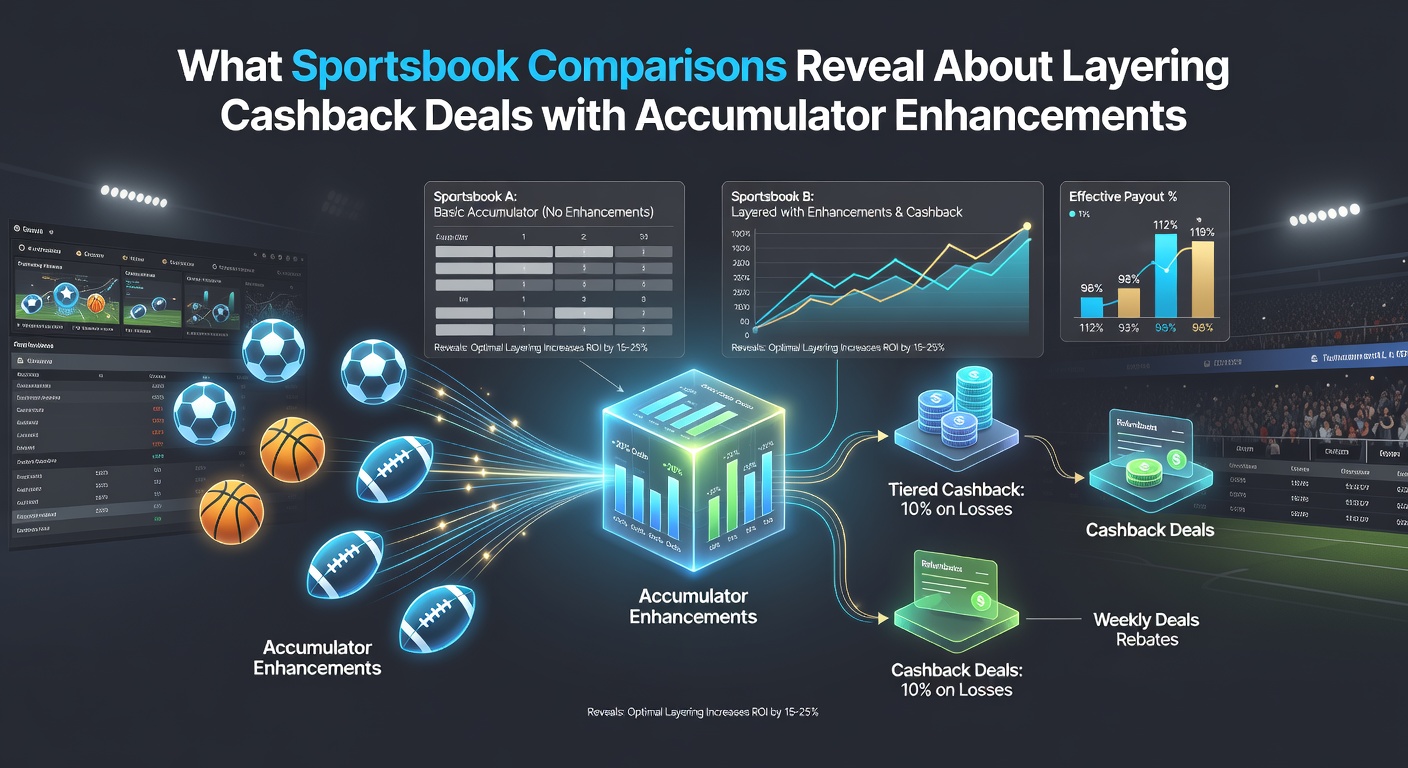
Market analysts track how leading sportsbooks structure their promotions, and comparisons across multiple platforms reveal consistent patterns when operators combine cashback mechanisms with accumulator enhancements. These layered approaches allow users to apply percentage returns on losses directly to boosted accumulator bets, creating sequential value that extends across multiple wager cycles. Data from platform audits conducted through early 2026 shows operators adjusting cashback percentages between 5 and 15 percent while simultaneously offering accumulator multipliers that range from 1.2x to 3.0x on qualifying selections.
Core Elements of Layered Promotions
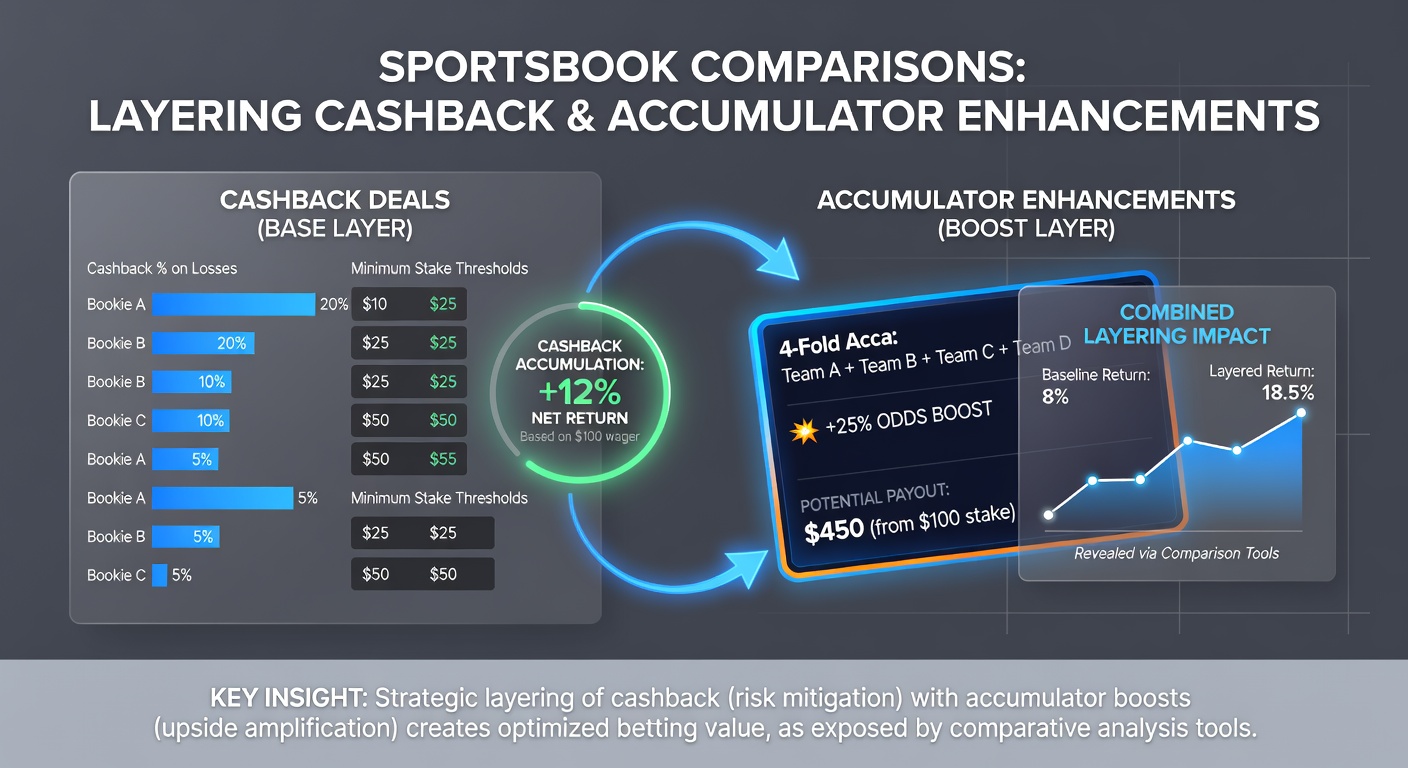
Cashback deals operate as post-settlement credits applied to net losses over a defined period, whereas accumulator enhancements increase potential returns on multi-leg bets that meet minimum leg and odds thresholds. When layered, the cashback credit can fund additional accumulator stakes, which in turn qualify for further enhancements. Observers note that platforms display these offers through dedicated sections in their promotions dashboards, where users see separate eligibility rules for each component before any combination occurs. Figures from industry tracking services indicate that such combined structures appeared in over 60 percent of major operator campaigns during the first half of 2026.
Patterns Identified Across Platform Comparisons
Side-by-side evaluations of different sportsbooks highlight several recurring design choices. One pattern involves requiring cashback to be used within a specific window, typically seven to fourteen days, before it expires, while accumulator boosts remain available on a weekly rotation. Another pattern ties the size of the accumulator enhancement to the volume of cashback claimed in the preceding period. Researchers tracking these mechanics across European and North American markets report that operators in regions with stricter advertising rules tend to present the components sequentially rather than as a single bundled offer. This sequencing reduces the risk of misinterpretation while still permitting users to apply credits in sequence.
Regional Variations in Offer Structure
Comparisons involving operators licensed in Australia and Canada show distinct approaches to minimum stake requirements. Australian-facing platforms often set higher minimums for accumulator legs when cashback is involved, whereas Canadian operators apply uniform stake thresholds regardless of funding source. Data released by the American Gaming Association in June 2026 documented similar layering tactics in several U.S. states, where cashback percentages averaged 8 percent and accumulator multipliers reached 2.5x on football and basketball selections. These figures align closely with trends observed in other regulated jurisdictions.
What's interesting is how the timing of cashback credits influences accumulator participation rates. Platforms that credit cashback within 24 hours of settlement see higher immediate uptake of enhanced accumulators compared with those that batch credits weekly. This difference appears in aggregated user behavior metrics compiled by multiple comparison services.
Operational Mechanics Behind the Layering
Operators implement these combinations through automated systems that track both loss amounts and accumulator qualification criteria in real time. Once cashback is issued, the system flags eligible accumulator bets that can receive the enhancement without requiring separate user action beyond selecting the boosted market. Comparisons reveal that some platforms automatically apply the highest available multiplier when multiple accumulator offers are active, while others require users to choose which enhancement to activate. This choice affects overall return calculations and appears most frequently on sites with tiered loyalty programs.
Evidence from operational reviews indicates that operators monitor the frequency of layered usage to adjust future offer parameters. When participation exceeds internal targets, cashback percentages may decrease slightly in subsequent campaigns while accumulator multipliers remain stable. Conversely, lower uptake prompts increased visibility for the combined offers through push notifications and in-app banners.
Impact on User Transaction Patterns
Transaction logs analyzed across several major platforms show that users who apply cashback to accumulator bets tend to place larger stake amounts on subsequent wagers compared with those who withdraw credits. This pattern holds across different bet types and persists for periods ranging from two to four weeks after the initial layering occurs. Industry reports from the European Gaming and Betting Association note parallel trends in member markets during the same timeframe.
Those who've examined these datasets point out that the sequencing of credits and boosts creates measurable differences in session length and total turnover. Sessions involving layered promotions average 12 percent longer than standard betting sessions, according to aggregated platform statistics. The additional time stems from users reviewing multiple accumulator options before committing cashback funds.
Conclusion
Comprehensive sportsbook comparisons continue to demonstrate that cashback and accumulator layering follows predictable structural patterns across operators. These patterns include defined credit windows, stake thresholds, and automatic or user-selected multiplier applications. Regional differences in minimum requirements and presentation styles reflect local regulatory environments, while underlying mechanics remain consistent. Ongoing data collection through mid-2026 provides further clarity on how these combined offers influence transaction volumes and user engagement across multiple markets.