Layered Incentives: Patterns of Free Offer and Boost Combinations in Digital Betting
Ulrich Richter · Jul 20, 2026

Layered Incentives: Patterns of Free Offer and Boost Combinations in Digital Betting
Digital betting platforms have developed multiple ways to structure free offers alongside boosts, and users frequently combine these elements in repeatable sequences that affect overall returns. Data from various operators indicates that certain pairings occur more often than others, particularly when welcome bonuses align with accumulator enhancements or when no-deposit credits precede odds multipliers. These combinations appear across mobile applications and desktop sites alike, with timing and sequencing playing central roles in how participants structure their activity.
Recurring Sequences Across Platforms
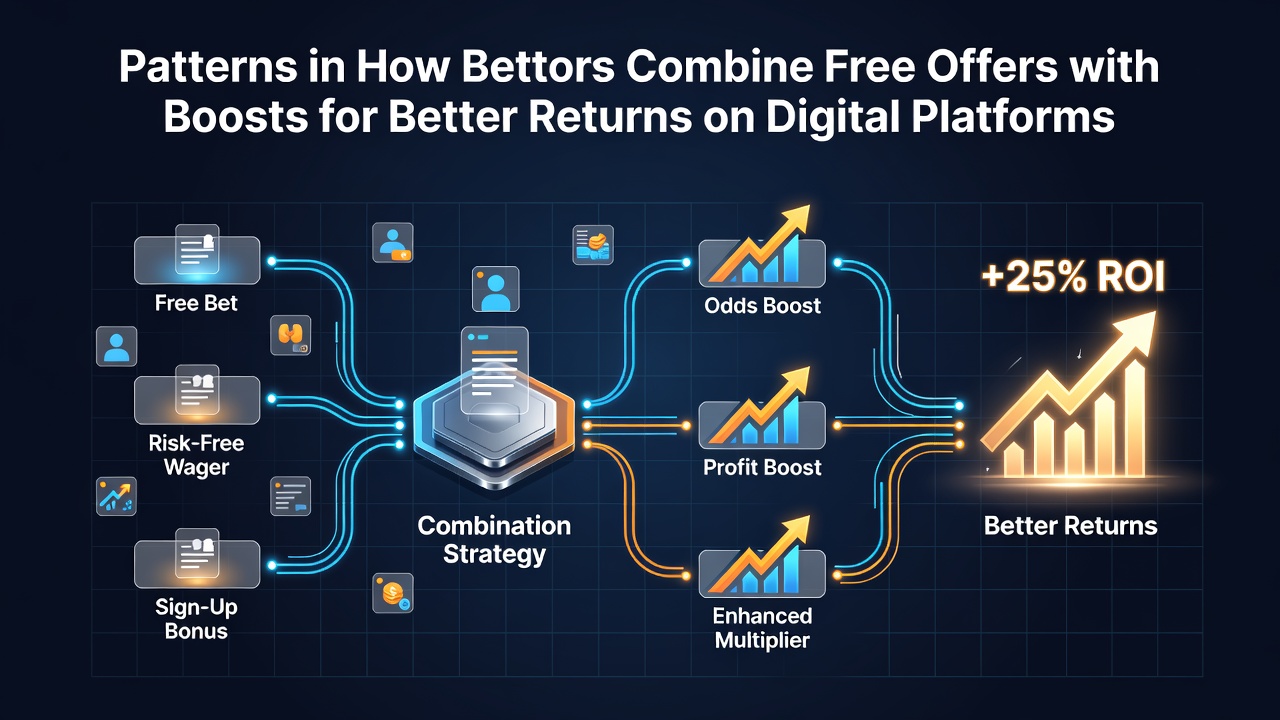
One pattern involves starting with a no-deposit free bet, then applying an accumulator boost once the initial stake generates returns. Platforms track these moves through user data, and reports show that users who follow this order often extend play sessions compared with those who activate boosts first. Another sequence places cashback credits after a boosted multi-leg bet, which allows participants to recycle portions of losses into new wagers without additional deposits. Observers note that these loops appear more consistently on apps that display both offer types on the same dashboard, reducing the steps required to activate each component.
Studies from industry research groups reveal that users who combine free bets with boosts within a single 24-hour window achieve different return profiles than those who space the same offers across several days. The shorter window tends to concentrate activity around major sporting events, while longer intervals align with ongoing league schedules. In July 2026, several platforms adjusted their offer calendars to highlight these timing options, resulting in measurable shifts in how users layered the incentives.
Platform Design Influences on Combinations
Operators structure their interfaces differently, and these choices affect which combinations users select most often. Some sites display free offers and boosts in separate tabs, which leads participants to treat them as distinct steps rather than integrated tools. Others merge both categories into a single promotions feed, and data from those platforms shows higher rates of simultaneous activation. Mobile-only rewards frequently pair with accumulator boosts because app-exclusive credits carry fewer restrictions on bet types, allowing users to meet boost thresholds more easily.
According to an analysis published by the American Gaming Association, operators that provide clear stacking rules within their terms see more consistent use of combined offers. In contrast, platforms with vague eligibility language record lower completion rates for multi-offer sequences. Users on sites with automated tracking tools also demonstrate steadier patterns, because the system reminds them when a free bet qualifies for an active boost.
Regional Data and Timing Trends
Figures collected through mid-2026 indicate that European and North American platforms report similar layering behaviors, although the specific sports involved differ. Soccer accumulators dominate in one region while basketball and baseball drive activity in another, yet the underlying combination logic remains comparable. A report issued by the Australian Institute of Criminology examined digital wagering patterns and found that users who combine no-deposit offers with boosts maintain longer account activity spans than single-offer users, regardless of sport focus.
July 2026 updates to several platform algorithms further highlighted these trends by surfacing eligible boost options immediately after a free bet redemption. This design change coincided with increased volume in accumulator bets across multiple operators, suggesting that reduced friction between offer types encourages broader participation in combined strategies.
Outcomes and Tracking Methods
Platforms employ various metrics to monitor how users combine offers, including redemption rates, average stake sizes, and session duration. These measurements show that certain sequences produce higher completion percentages when the free offer covers the full stake required for a boost. When partial coverage occurs, users sometimes abandon the second step, which lowers overall conversion for that pairing. Researchers tracking these movements across different digital environments have identified consistent drop-off points that operators now address through interface adjustments.
Take one dataset reviewed in 2026 that compared users who applied boosts immediately after free bet wins versus those who waited for additional promotions. The immediate-application group recorded steadier engagement metrics, while the delayed group showed more variable results tied to the arrival of new offers. Such distinctions help explain why platforms continue refining the visibility and sequencing of their incentive layers.
Conclusion
Patterns in combining free offers with boosts reflect both user preferences and platform design choices, with timing, interface layout, and eligibility clarity shaping how frequently each sequence occurs. Data collected through July 2026 demonstrates that these combinations follow identifiable paths across digital environments, and operators continue to adjust presentation methods in response to observed behaviors. The resulting landscape shows measurable differences in how participants structure their activity when multiple incentive types become available simultaneously.