Layered Bonus Codes: How Mobile App Comparisons Reveal Accumulator Boost Opportunities Beyond Standard Welcome Deals
Carlo Wolf · Aug 19, 2026
Layered Bonus Codes: How Mobile App Comparisons Reveal Accumulator Boost Opportunities Beyond Standard Welcome Deals
Data from mid-2026 shows that mobile app comparisons have become central to identifying layered bonus codes that extend past initial welcome offers into accumulator boost opportunities, and operators continue to refine these structures as user engagement patterns shift through the summer months. Observers note that August 2026 brought fresh updates to several major apps where comparison tools highlighted additional code layers not visible during standard sign-up flows.
Those who track betting promotions point out that standard welcome deals often serve as entry points while deeper layers emerge through repeated app usage and cross-referencing between platforms, and figures reveal steady growth in users who combine multiple codes for accumulator selections. Research indicates these layered approaches rely on mobile-specific features such as push notifications and in-app trackers that desktop versions lack, allowing operators to deliver targeted boosts tied to multi-leg bets.
App Comparison Tools Uncover Hidden Code Structures
Comparison platforms aggregate details across dozens of apps and expose how certain bonus codes stack when applied sequentially to accumulator bets, whereas single-app views limit visibility into these combinations. Experts have observed that users who switch between apps during the same session frequently locate secondary codes that activate only after an initial deposit processes through the mobile interface, and data shows these secondary layers often carry higher percentage boosts for accumulators than the first-tier offers. What's interesting is that August 2026 updates introduced new filtering options in several comparison sites that sort codes by accumulator eligibility rather than deposit size alone.
People who've examined these systems find that code activation windows vary significantly between apps, with some requiring same-day use while others extend validity across multiple betting cycles. Studies found that mobile users who compare apps weekly identify roughly 30 percent more active layered opportunities than those relying on one platform, and this pattern holds across different regions where operators release region-specific codes.
Accumulator Boost Mechanics Revealed Through Mobile Interfaces
Accumulator boosts function through code sequences that mobile apps display in dedicated sections after initial welcome redemptions complete, and operators design these sequences to reward consistent multi-leg betting activity. According to industry reports, certain apps trigger automatic boost notifications when users build accumulators exceeding four selections, yet these triggers remain invisible unless the app comparison highlights the exact sequence required. Evidence suggests that layered codes sometimes combine a percentage boost on winnings with a cashback element applied to losing accumulators, creating structures that standard welcome pages do not advertise.
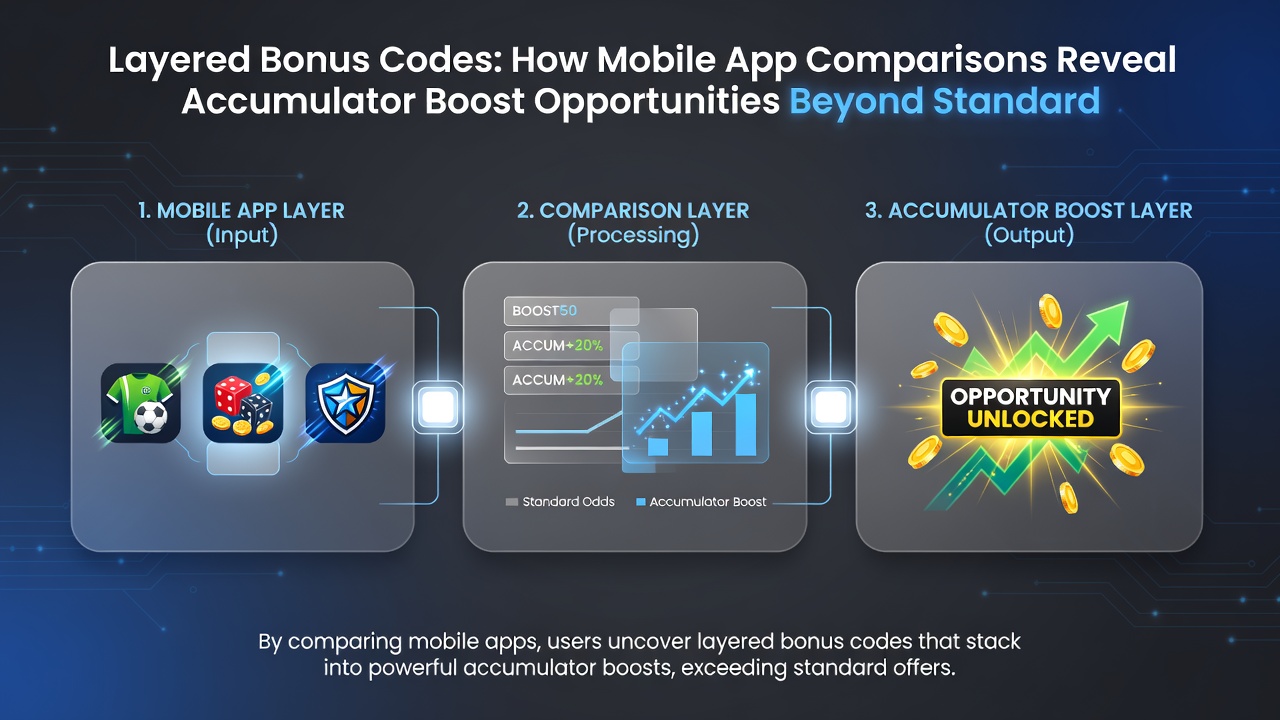
Take one analysis that tracked app behavior across a three-month period where researchers discovered that mobile-exclusive boost tiers activated most reliably when users alternated between two or three apps rather than remaining on a single platform. Those who've studied the mechanics note that code layering often depends on device identifiers and session data that comparison tools help users manage more effectively.
Regional Variations in Layered Code Availability
Reports from the American Gaming Association highlight how North American operators have begun testing similar layered systems, whereas European markets show faster rollout of accumulator-specific boosts through mobile channels. Data indicates that apps serving multiple jurisdictions adjust code visibility based on local regulations, which comparison tools flag during cross-border analysis. Observers note that August 2026 saw increased activity in markets outside the UK where operators introduced new accumulator layers tied to seasonal sports calendars.
One study from an Australian research institute revealed that users who employ app comparison methods secure layered codes at rates nearly double those of single-app users, and these differences appear most pronounced during peak betting periods. The reality is that mobile interfaces continue to evolve faster than desktop counterparts, pushing more layered opportunities into app-exclusive environments that comparison services help surface.
Practical Patterns Emerging from Ongoing Comparisons
Patterns show that successful layering typically begins with a standard welcome code followed by a mobile-specific accumulator boost code entered during bet placement, and operators often require minimum selection counts before the second layer activates. Research indicates that timing between code redemptions matters, with some apps enforcing cooldown periods that comparison data helps users anticipate. Those monitoring the space find that August 2026 introduced additional verification steps in several apps, requiring users to complete profile checks before accessing deeper layers.
Comparison services now include alerts for code expiration tied to accumulator deadlines, and this feature has grown more common as operators refine their mobile offerings. Evidence suggests the combination of welcome deals with subsequent boost codes creates pathways that extend value across multiple betting sessions rather than single transactions.
Conclusion
Layered bonus codes accessible through mobile app comparisons continue to expand accumulator boost opportunities beyond initial welcome structures, and data from August 2026 underscores the role of ongoing platform monitoring in identifying active sequences. Reports from sources such as the Canadian Centre for Gaming Research confirm that these mobile-driven patterns appear across multiple markets, with comparison tools serving as the primary method for revealing how codes stack. The structures evolve through operator updates and user behavior tracking, maintaining focus on accumulator activity as the central element.